Design & technology
BYU Humanities
A clearer path to people and programs.
Content planning, responsive design, and a WordPress publishing system for a university college.
Overview
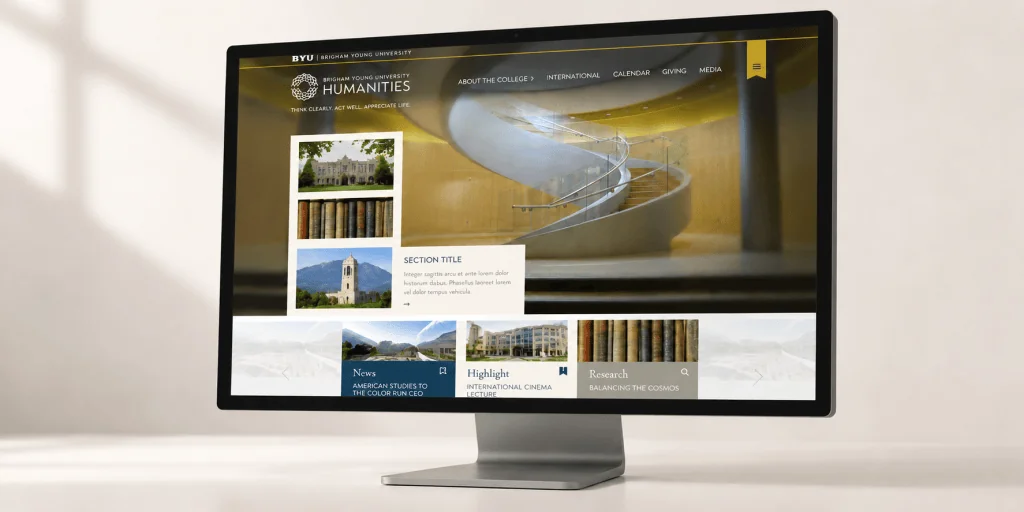
BYU's College of Humanities needed a website that made its programs, people, and activities easier to explore. Working with the team at Riser, I helped shape a redesign that connected content planning, custom design, and WordPress development. The goal was to give visitors clear paths through the college's information and give staff a practical way to keep it current.
My role
As Creative Technology Director at Riser, my work centered on requirements, design direction, technical planning, and coordination across designers, developers, and project managers. I helped connect the college's needs with the team's design and development work, supporting decisions from early planning through delivery. The visual design and implementation were a shared effort by the Riser team.
Making the content easier to navigate
The college's website had to serve several purposes: explain its programs, introduce its people, share news and research, and help visitors find events and resources. Those needs called for a structure that would carry from the homepage through the rest of the site.
Our process started with identifying the content and planning how it would fit together. Annotated wireframes documented navigation, page layouts, and responsive behavior. They also established patterns for program listings, directories, news, and supporting links, giving the team a shared reference before moving into detailed design.
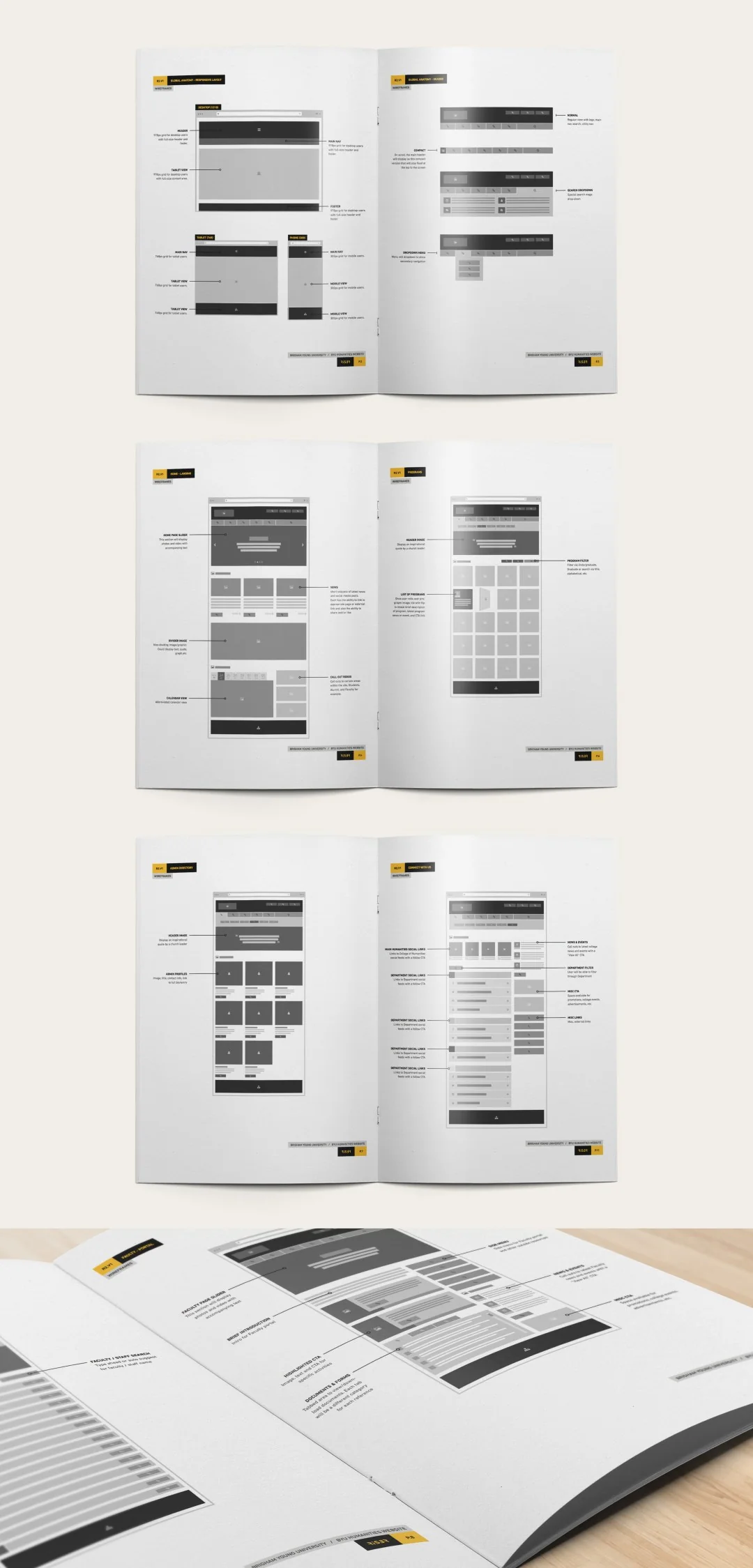
Wireframes documented navigation, content hierarchy, and page behavior across screen sizes.
Developing the visual direction
The design work used large photography, blue and gold accents, and distinct content sections to express the college's identity. The homepage combined a prominent feature area with news, research highlights, upcoming events, and quick links.
The same approach extended to interior pages. Calendar views, directory listings, and media collections each needed layouts suited to their content while still feeling like part of one website. The design explorations show how the team developed that consistency across different page types.
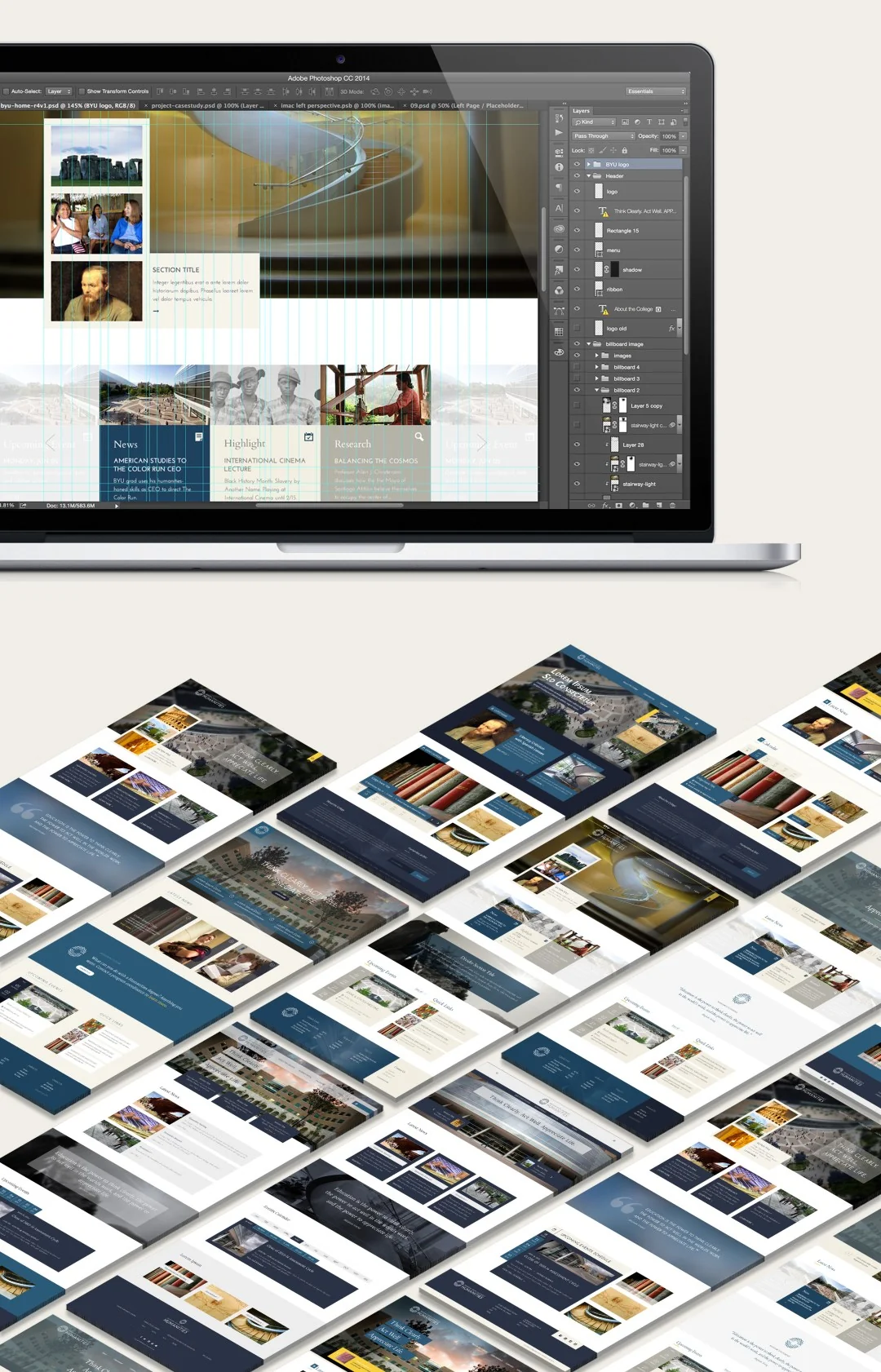
Visual design explorations connected the college's identity with a consistent set of website layouts.
Building for staff and visitors
WordPress gave the college a content management system for updating its website. After the design was approved, Riser's development team built the custom pages around that publishing foundation.
Responsive layouts were part of the work from the wireframes onward. The desktop, tablet, and phone designs show how navigation, feature content, events, and links adapted to different screen sizes. That planning helped keep content priorities consistent as the available space changed.
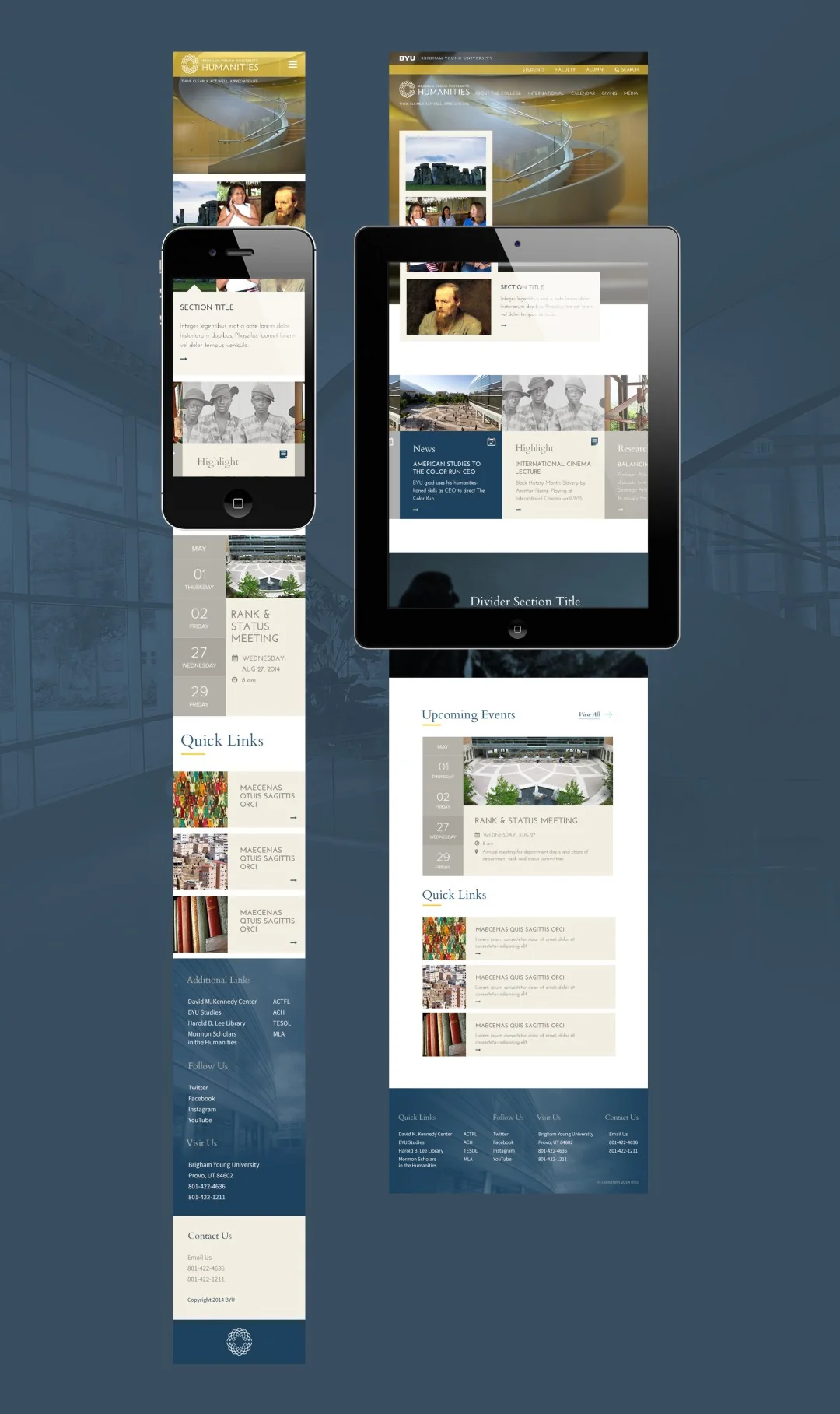
Phone and tablet design mockups show how the same content adapted to narrower screens.
The outcome
The project delivered a custom, responsive WordPress website with a consistent design across the college's main content areas. It gave the college control over day-to-day content updates and provided visitors with organized routes to programs, people, and resources.

A tablet mockup of the website's image-led content layout.
Created with the design and development team at Riser for BYU's College of Humanities. Project imagery shows the original design work and presentation mockups.