Product leadership
Spera
Bringing independent work and income together.
A connected SaaS platform for clients, projects, time tracking, invoicing, and payments.
Overview
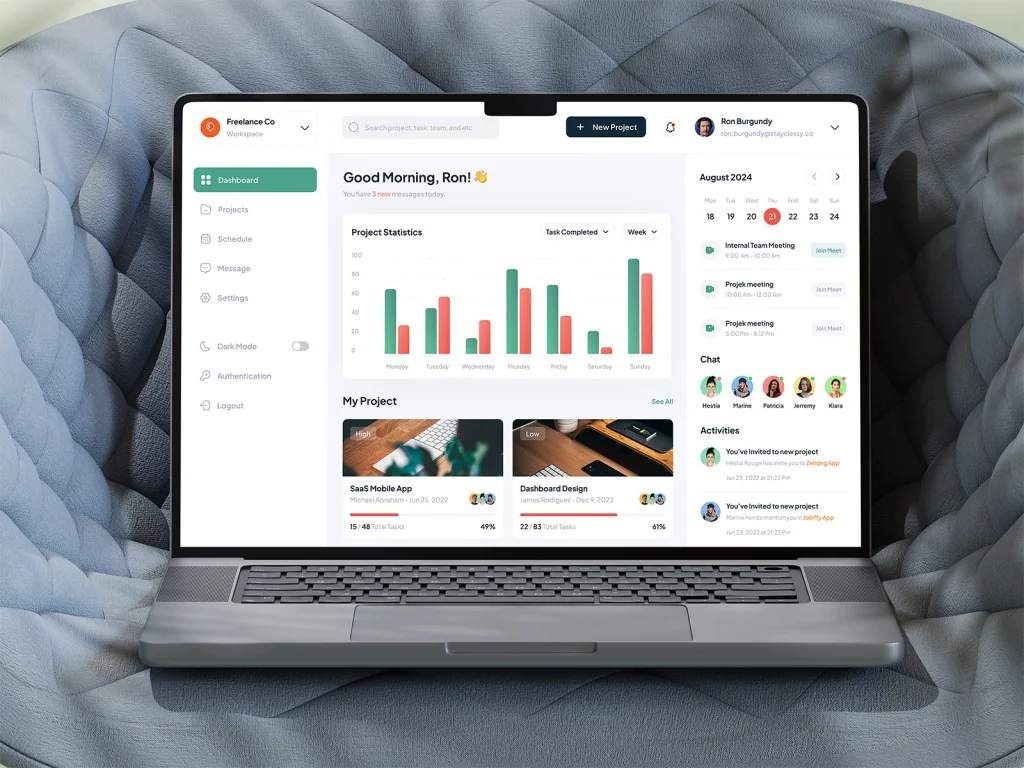
Spera was a SaaS platform for independent professionals managing clients, projects, time, invoices, and payments. The product connected those activities around the workflow of running an independent business.
As Director of Product Development, I led product design and development from an early idea into working software. My responsibilities included translating research into requirements, prioritizing the backlog, planning releases, coordinating internal and outsourced contributors, and assessing release readiness with the team. I stayed involved as the platform became operational, coordinating bug fixes and ongoing maintenance.
The work combined product ownership with hands-on research and design. I needed to understand how freelancers worked, make the product direction clear, and keep the team moving through the practical constraints of building a SaaS business.
Connecting the whole workflow
For an independent professional, a project does not end when the work is finished. Time needs to be recorded, an invoice needs to reach the right client, and payment needs to follow. When each step lives in a different system, the user has to carry the context between them.
That connected journey shaped Spera's product requirements. Clients, projects, time tracking, invoicing, and payments needed to make sense together. The experience also had to remain approachable for someone working alone while supporting the needs of a growing business.
I worked with company leadership, a research partner, and the product team to connect those user needs with business objectives and technical feasibility. The product needed a coherent direction that could guide individual feature decisions.
Turning research into requirements
I translated outside research and my own user interviews into requirements, workflows, information architecture, prototypes, and interface designs. The research considered how different independent professionals organized their businesses and which tools they already relied on.
The UX strategy connected interview findings to a sitemap and user flows, then used those flows to guide wireframes and the wider experience. Low-fidelity work established the structure, while functional prototypes made interactions concrete enough to review before implementation.
This gave the work a traceable progression: understand the activity, define the flow, and make the proposed behavior visible. My design contribution helped turn product questions into something leadership, designers, and engineers could examine together.
Defining the first release
The first release needed a clear boundary within a broader platform vision. I prioritized the backlog and planned releases with internal and outsourced contributors, keeping the immediate work connected to the product direction.
The MVP plan made scope choices explicit. Freelancer and business accounts, invoicing and payments, and task management were in the initial scope. Job listings, bill pay, a social platform, integrations, team management, and other ideas were identified for future consideration.
Keeping those distinctions visible mattered when discussing priorities. A useful first release needed to support a meaningful business workflow, with later opportunities remaining separate from the commitments the team was working toward.
Release planning included checkpoints for wireframes, visual design, development handoff, and a beta release. These were planning milestones, providing a way to discuss the work and what needed to be ready at each stage.
Coordinating delivery and decisions
I led the product design and development teams, established development processes, and kept internal and outsourced contributors coordinated. Tight deadlines and technical challenges required ongoing discussion with the engineers about the approach and the work ahead.
I communicated progress to leadership, investors, and the board, and presented the product and technology to people evaluating the business. That meant keeping the product understandable at different levels, from the detail of a workflow to the broader direction of the platform.
Payments added practical constraints to those decisions, including international payment requirements. I worked with engineers and legal and compliance specialists to understand how those requirements affected the experience and delivery approach.
My hands-on implementation contribution was HTML and CSS. Engineers implemented the application and payment technology, with my work connecting product requirements, interface design, and delivery coordination.
Testing the experience and refining priorities
I conducted user interviews and user acceptance testing, using what we learned to assess release readiness with the team. Testing a connected workflow exposed issues that were easy to miss when reviewing individual screens.
In moderated payment testing, users found the handoff to the third-party payment provider confusing. One did not recognize that the redirected experience was part of the payment process. Confirmation messages were also easy to miss, and a participant could not add a client while working through invoicing.
Those findings gave the team specific workflow issues to evaluate and prioritize. They connected interface details with larger product questions: whether people understood the next step, recognized that an action had completed, and had the information they needed to continue.
When acceptance testing also exposed problems with menu labels and messaging, I followed with a ten-person open card sort. Participants created and named their own categories, helping us examine how they expected the platform's features to be organized. The research resulted in a proposed navigation and content structure.
The work continued beyond an initial release. As the platform became operational, I coordinated bug fixes and ongoing maintenance, carrying user feedback and product understanding into the next set of decisions.
Outcome
The team took Spera from an early product idea into a working SaaS platform for managing independent work and income. My responsibilities continued across research, product definition, design, backlog priorities, releases, and maintenance.
Spera strengthened how I connect product direction with day-to-day delivery. Research needed to inform the work, scope needed to be clear, and the experience needed to hold together across the steps users actually followed.